Zeetech Solutions

What Is CRM and Why Every Business Needs It

Share with friends

In today’s fast-paced and highly competitive business environment, companies must do
more than offer good products or services—they must build meaningful, long-lasting
relationships with customers. As customer expectations evolve, the ability to deliver
consistent, personalized, and proactive service has become a major competitive advantage.
This is exactly where Customer Relationship Management (CRM) systems come in.
A CRM system is a centralized platform that helps businesses organize, automate, and
synchronize every aspect of customer interaction. Instead of relying on scattered
spreadsheets, manual entries, or disconnected communication channels, CRM brings
everything into one structured system. It acts as the backbone of a company’s sales,
marketing, and support strategies by ensuring that customer information is up-to-date,
accessible, and actionable.


What Exactly Is CRM?

CRM stands for Customer Relationship Management—a system designed to help
businesses manage interactions with current and potential customers. At its core, CRM
focuses on improving business relationships through data organization, activity tracking,
automation, and workflow efficiency.
A CRM system typically includes:


● Contact and customer information management
● Lead and opportunity tracking
● Sales pipeline visualization
● Communication logging (calls, emails, meetings, messages)
● Automated reminders and follow-up tasks
● Reporting and analytics for better decision-making


By storing all customer information in one place, CRM ensures that sales teams stay
aligned, organized, and equipped with the information they need to close deals and build
trust.


Why CRM Matters: Key Benefits for Every Business

  1. Centralized Customer Data
    A CRM provides a single source of truth for all customer-related information. This ensures
    that your entire team—sales, marketing, and support—has accurate and real-time access to
    customer profiles, history, preferences, and communication logs.
  2. Better Sales Pipeline Management
    With CRM, businesses can visually track every lead as it moves through different sales
    stages. This transparency helps teams understand which opportunities need immediate
    attention and which are more likely to convert.
  3. Automation That Saves Time
    CRM systems automate repetitive tasks like:
    ● Follow-up reminders
    ● Email responses
    ● Status updates
    ● Data entry
    ● Lead assignment
    This allows your team to focus more on building relationships and closing deals rather than
    admin work.
  4. Improved Customer Experience
    With access to complete customer history, businesses can deliver more personalized
    support and anticipate customer needs. This leads to:
    ● Higher customer satisfaction
    ● Stronger trust
    ● Enhanced loyalty
    ● Increased repeat purchases
    Customers appreciate when a company remembers their preferences and communicates
    consistently—and CRM makes that possible.
  5. Data-Driven Decision Making
    CRM systems come with dashboards and reports that give insights into:
    ● Lead conversion rates
    ● Sales performance
    ● Team productivity
    ● Customer behavior
    ● Forecasted revenue
    This helps leaders make smarter decisions backed by real data instead of guesswork.
  6. Reduced Missed Opportunities
    Without CRM, businesses often forget to follow up on leads, misplace customer information,
    or lose deals due to lack of organization. CRM eliminates these risks by:
    ● Tracking every lead
    ● Sending reminders
    ● Providing complete visibility of the sales funnel
    No customer slips through the cracks.
    Who Can Benefit from CRM?
    Every type of business—across every industry—can benefit from CRM. Whether you’re
    handling 20 customers or 20,000, the ability to track and manage interactions efficiently is
    invaluable.

    CRM is especially useful for:
    ● Small and medium businesses looking to grow revenue
    ● Startups needing structure and automation
    ● Sales teams managing multiple leads and follow-ups
    ● Service-based companies requiring customer history tracking
    ● E-commerce businesses wanting personalized marketing
    ● Enterprises integrating complex workflows
    CRM adapts to the size and nature of your business and scales as you grow.

    The Future of Business Is Customer-Centric
    As digital transformation accelerates, customers expect faster responses, personalized
    communication, and seamless experiences. Businesses that manage relationships efficiently
    will outperform those that don’t. CRM is no longer a luxury—it’s an essential part of modern
    business infrastructure.
    With the right CRM, companies can improve productivity, strengthen customer connections,
    and gain a clear competitive edge.

What Is CRM and Why Every Business Needs It Read More »

Why Odoo CRM Is the Smartest Choice for Growing Businesses

Share with friends

As businesses grow, their customer interactions grow with them—more leads, more
follow-ups, more emails, more tasks, and a whole lot more responsibility. At some point,
managing everything manually becomes impossible. That’s where Odoo CRM shines. It’s
not just another CRM platform; it’s a smart, flexible system that adapts to the way your
business works.
Odoo CRM is a part of the wider Odoo ecosystem—an all-in-one suite that covers everything
from sales to invoicing to inventory. This makes Odoo CRM incredibly powerful because it
connects every part of your business into one seamless flow.

What Makes Odoo CRM Unique?

Odoo CRM isn’t built to be complicated—it’s built to be intuitive. Whether you’re a small
team or a large company, Odoo lets you start simple and scale naturally.

Here’s what makes it stand out:

1. A Visual Pipeline That Actually Makes Sense
With its drag-and-drop pipeline, Odoo CRM gives you a clean visual overview of your leads.
You can move deals across stages with a simple drop, filter your pipeline in seconds, and
instantly see your team’s progress.
2. Automated Actions That Save Hours
Odoo CRM reduces manual work by handling repetitive tasks such as:
● Sending follow-up emails
● Scoring leads based on behavior
● Assigning leads to the right salesperson
● Logging communication automatically
It’s like having a virtual assistant working behind the scenes.
3. Communication All in One Place
Whether your customers reach out via email, phone, SMS, or WhatsApp—Odoo CRM
collects everything in one unified timeline. Your team never loses track of a conversation
again.
4. A Flexible System That Grows With You
Start with CRM today and add:
● Sales
● Accounting
● Inventory
● HR
● Projects
● Marketing
● Helpdesk
…all whenever you need them. Since all Odoo apps are connected, your business grows
without switching platforms or starting over.
5. Real-Time Insights to Help You Improve
Odoo CRM offers smart dashboards that give you a clear look at:
● Lead conversion rates
● Daily activities
● Sales forecasts
● Team performance
● Deal progress
The data helps you make confident decisions faster.

Why Growing Businesses Love Odoo CRM

Businesses choose Odoo CRM because it brings simplicity and power together. It’s easy to
use for beginners but customizable enough for companies that require complex workflows.
Whether you’re scaling operations or building efficiency, Odoo adapts effortlessly.
It helps you:
● Stay organized
● Reduce routine work
● Close deals faster
● Deliver better customer experiences
● Connect every department under one system
Odoo CRM becomes a digital partner that grows with your vision.

Why Odoo CRM Is the Smartest Choice for Growing Businesses Read More »

What Is Out-of-the-Box CRM and Who Is It Best For?

Share with friends

Not every business needs a fully customized or deeply integrated CRM system right from the
start. Sometimes, what a company really needs is a simple, ready-to-use solution that helps
them get organized instantly. This is exactly what “out-of-the-box CRM” is designed for.
Out-of-the-box CRM systems come with pre-built features and workflows that businesses
can start using right away—no complex setup, no long training sessions, and no heavy
development required.

What Does “Out-of-the-Box” CRM Really Mean?

Think of out-of-the-box CRM as the “plug-and-play” version of CRM software. It comes with
standard features like:
● Contact management
● Basic lead tracking
● A simple pipeline
● Follow-up reminders
● Basic reporting
It’s perfect for businesses who want to get started quickly without spending extra time or
money customizing their system.

Why Businesses Choose Out-of-the-Box CRM

1. Quick Setup and Zero Hassle
With pre-designed workflows, you can start using the system on day one. No coding. No
long onboarding. Just log in and follow the built-in steps.
2. Affordable for Small Teams
Out-of-the-box CRMs are usually budget-friendly. They provide essential features without the
cost of full-scale customization or integration.
3. Easy to Understand
The interfaces are straightforward, making them ideal for small teams or businesses
transitioning from spreadsheets. Users can learn the system in minutes.
4. Great for Standard Sales Processes
If your sales pipeline is simple—like inquiry → follow-up → closing—an out-of-the-box CRM
may be all you need.

Who Is Out-of-the-Box CRM Best For?

This type of CRM is ideal for:
● New startups
● Freelancers or solo entrepreneurs
● Small businesses with basic sales processes
● Teams shifting from manual tracking for the first time
● Companies that don’t have technical resources
If your main goal is to get organized quickly and improve follow-ups, an out-of-the-box CRM
is a great starting point.

What Is Out-of-the-Box CRM and Who Is It Best For? Read More »

Mobile business growth Customer engagement apps Business operations automation Mobile commerce solutions App-based business strategies Mobile app marketing User behavior analytics Operational efficiency through apps E-commerce mobile apps App development for business growth Business operations automation, inventory management app, streamline processes, operational efficiency, mobile business tools

How Mobile Apps are Revolutionizing Business Growth

Share with friends

Mobile apps have become a driving force in modern business, providing new avenues for growth, customer engagement, and operational efficiency. With an increasing number of consumers relying on their smartphones for everything from shopping to booking services, businesses that harness the power of mobile apps can stay ahead of the competition. This blog explores how mobile apps are revolutionizing business growth, with actionable insights into their benefits, implementation strategies, and the future of app-based businesses.

Enhanced Customer Engagement through Mobile Apps

Mobile apps allow businesses to connect with their customers directly, offering personalized experiences, push notifications, and real-time updates. By integrating features such as in-app messaging, loyalty programs, and one-click purchasing, businesses can increase customer retention and satisfaction. This level of interaction keeps customers engaged and helps foster brand loyalty, ultimately driving more revenue.

Streamlining Business Operations for Higher Efficiency

Mobile apps can also streamline various business operations by automating processes such as order management, inventory tracking, and customer support. Apps designed for internal use help teams collaborate more effectively, while external apps allow customers to interact with the business more smoothly. These efficiency gains lead to reduced operational costs and improved service delivery, which are crucial for scaling a business in today’s competitive market.

    Expanding Reach and Accessibility to a Global Audience

    Mobile apps break down geographical barriers, allowing businesses to reach customers across the globe. With the right app marketing strategy, a business can penetrate new markets without the need for a physical presence. Additionally, apps can be optimized for different languages and regions, making products and services accessible to a broader audience. This is especially beneficial for e-commerce businesses aiming for international growth.

      Leveraging Data Insights for Business Growth

      One of the most valuable aspects of mobile apps is their ability to gather user data and provide insights into customer behavior. Businesses can use this data to refine their marketing strategies, improve user experiences, and introduce features that meet customer demands. This data-driven approach enables businesses to make informed decisions that fuel long-term growth.

        How Mobile Apps are Revolutionizing Business Growth Read More »

        WooCommerce vs Shopify for e-commerce 2024 Best e-commerce platform comparison Shopify e-commerce store setup tips WooCommerce customization guide for e-commerce Shopify vs WooCommerce for e-commerce SEO WooCommerce plugin recommendations for e-commerce Shopify pricing plans for e-commerce 2024 WooCommerce hosting options for e-commerce stores Shopify pros and cons for e-commerce WooCommerce themes and templates for e-commerce WooCommerce vs Shopify e-commerce security Best e-commerce SEO practices 2024 Shopify vs WooCommerce for e-commerce beginners WooCommerce e-commerce store optimization tips Shopify advanced features for e-commerce businesses

        Maximizing E-Commerce Success: WooCommerce vs. Shopify

        Share with friends

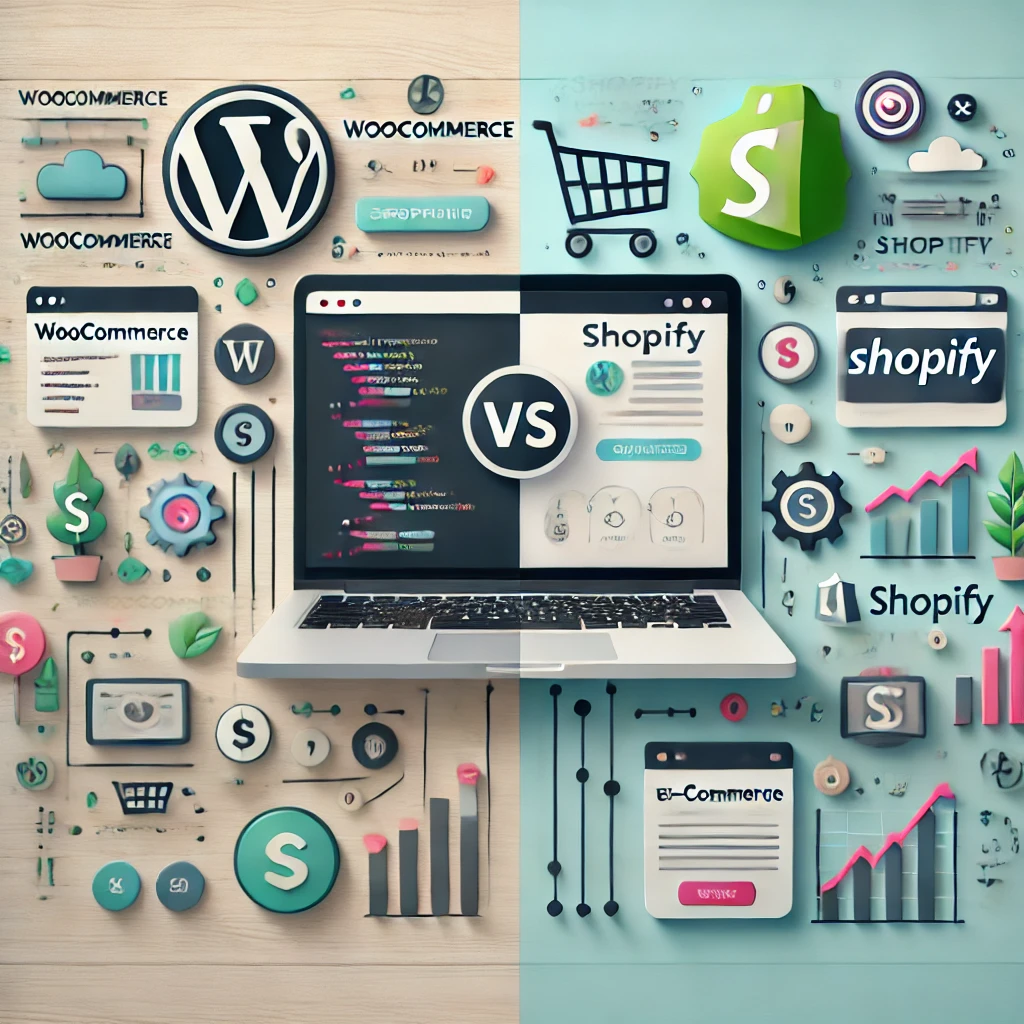
        When it comes to launching a successful e-commerce business, selecting the right platform can make all the difference. WooCommerce and Shopify are two of the most widely used e-commerce solutions, but which one is the best fit for your business needs? Let’s explore their features, customization options, costs, and SEO capabilities to help you choose the ideal platform for your e-commerce venture.

        1. Ease of Use: Shopify’s Simple Setup vs. WooCommerce’s Flexibility

        For those new to e-commerce, Shopify provides a user-friendly, all-in-one platform that simplifies the store setup process. It’s an excellent choice for beginners who need to get their e-commerce store up and running quickly. On the other hand, WooCommerce, which operates through WordPress, offers more flexibility for those familiar with web development, making it perfect for e-commerce businesses looking for extensive customization and control.

        2. Customization & Features: WooCommerce’s Unlimited Control

        WooCommerce stands out in the e-commerce world for its unlimited customization options. Since it’s open-source, you can modify your store’s appearance, add numerous plugins, and integrate additional functionalities tailored to your e-commerce needs. While Shopify offers a variety of templates and built-in tools, it’s designed for e-commerce businesses that prefer simplicity and speed over deep customization.

        3. Cost Comparison: Which E-Commerce Platform Offers Better Value?

        The costs associated with WooCommerce and Shopify vary, depending on the features you need for your e-commerce store. Shopify operates on a subscription model, while WooCommerce is technically free but comes with additional expenses for hosting, plugins, and themes. Which platform offers better value depends on your e-commerce budget and the specific requirements of your business.

        4. SEO & Marketing Capabilities: Boost Your E-Commerce Store’s Visibility

        For e-commerce success, visibility is key, and SEO plays a critical role. WooCommerce, with its WordPress foundation, offers advanced SEO plugins and tools, giving you more control over optimizing your e-commerce store for search engines. Shopify, while also featuring SEO tools, may not offer the same level of depth and control as WooCommerce, but it still provides effective SEO features for those looking for an all-in-one e-commerce solution.

        Maximizing E-Commerce Success: WooCommerce vs. Shopify Read More »

        Remote work tools 2024Remove term: Cloud collaboration tools for teams Cloud collaboration tools for teamsRemove term: Best cloud tools for remote work Best cloud tools for remote workRemove term: Work from home collaboration tools Work from home collaboration toolsRemove term: Cloud solutions for remote teams Cloud solutions for remote teamsRemove term: Remote team productivity tools Remote team productivity toolsRemove term: Secure cloud collaboration tools Secure cloud collaboration toolsRemove term: AI-powered collaboration tools AI-powered collaboration tools

        Remote Work and Cloud Collaboration Tools: The New Normal in 2024

        Share with friends

        Introduction

        In 2024, remote work and cloud collaboration tools have become the foundation of modern business operations, transforming how teams connect and work together. As companies shift towards more flexible work environments, cloud-based tools ensure seamless communication and productivity. This blog delves into the critical role these tools play in optimizing remote work, increasing team efficiency, and enabling smoother collaboration across the globe.

        Must-Have Cloud Collaboration Tools for Remote Teams

        Google Workspace, Microsoft Teams, and Slack are some of the top cloud collaboration tools that empower remote teams to work from anywhere, at any time. These tools allow employees to access documents, share files, and collaborate in real-time, ensuring productivity and clarity in team projects. By embracing these essential platforms, businesses can maintain strong communication and avoid workflow disruptions.

        Boosting Productivity with Cloud Collaboration Tools

        The use of cloud collaboration tools significantly boosts productivity for remote workers. By providing a central hub for communication, file sharing, and task management, these tools ensure that team members remain focused and organized, regardless of their physical location. The flexibility and efficiency offered by these tools make them indispensable for any business navigating the new normal of remote work in 2024.

        Security and Data Protection in Cloud Collaboration

        A major concern for businesses is data security when using cloud-based tools. Cloud collaboration platforms such as Microsoft 365 and Google Drive provide secure environments with encrypted data and access controls, ensuring that sensitive information is protected. By leveraging these tools, businesses can work remotely without compromising on security or compliance standards.

        This SEO-optimized description integrates trending, high-search-volume keywords such as “cloud collaboration tools for remote work,” “remote team productivity,” “secure cloud tools,” and “remote work solutions” while using low-competition phrases like “boosting productivity with cloud tools” and “must-have tools for remote teams” to improve search visibility and engagement.

        Remote Work and Cloud Collaboration Tools: The New Normal in 2024 Read More »

        Remove term: AI cybersecurity trends AI cybersecurity trendsRemove term: AI for cyber defense AI for cyber defenseRemove term: AI in cybersecurity AI in cybersecurityRemove term: AI-driven security solutions AI-driven security solutionsRemove term: AI-powered threat detection AI-powered threat detectionRemove term: Artificial intelligence in network security Artificial intelligence in network securityRemove term: Cybersecurity automation with AI Cybersecurity automation with AIRemove term: Machine learning in cybersecurity Machine learning in cybersecurity

        Cybersecurity in the Age of AI Balancing Innovation with Protection

        Share with friends

        Cybersecurity in the Age of AI Balancing Innovation with Protection


        Introduction:-

        As artificial intelligence (AI) rapidly reshapes industries, cybersecurity faces both unprecedented opportunities and challenges. While AI brings innovation to many sectors, it also exposes new vulnerabilities, making cybersecurity more critical than ever. This blog explores how organizations can leverage AI’s potential while ensuring robust security measures to protect their data and operations in the digital age.

        AI’s Role in Enhancing Cybersecurity: Opportunities and Risks

        AI has transformed cybersecurity by providing advanced tools for detecting threats, automating responses, and improving overall defense mechanisms. However, with these advancements come risks, as cybercriminals also exploit AI for more sophisticated attacks. Learn how businesses can harness AI’s power to strengthen their defenses without compromising security.

        Building a Strong Cyber Defense with AI-Powered Solutions

        AI-driven solutions offer new ways to detect anomalies, predict cyber-attacks, and respond in real-time, minimizing damage. But using AI effectively requires a balanced approach, combining technology with human oversight. Discover the best strategies for using AI in cybersecurity to stay ahead of potential threats.

        This SEO-optimized description targets high-search-volume keywords like “AI in cybersecurity” and “AI-powered cyber defense” while focusing on low-competition keyphrases such as “AI solutions for cybersecurity” to ensure maximum visibility and reader engagement.

        Cybersecurity in the Age of AI Balancing Innovation with Protection Read More »

        5G technology, Internet of Things (IoT), Smart cities, IoT healthcare innovations, Industry 4.0, Smart manufacturing, 5G-powered agriculture, IoT in healthcare, Predictive maintenance, Smart farming solutions

        How 5G is Accelerating IoT Growth and Innovation Across Industries

        Share with friends

        Intriduction:-

        The integration of 5G technology is transforming industries by accelerating the growth and innovation of the Internet of Things (IoT). This technological revolution is redefining the way businesses operate, offering faster data speeds, low latency, and increased connectivity. In this article, we will explore how 5G is driving IoT innovation across various sectors, enhancing operations, and unlocking new opportunities for growth.

        1. 5G and IoT: Enabling Smart Cities

        The implementation of 5G technology is reshaping urban environments through smart city initiatives. With high-speed internet and low latency, 5G networks enable a seamless connection between IoT devices, allowing cities to improve traffic management, waste collection, and energy consumption. Smart streetlights and sensors in 5G-enabled cities monitor real-time data, optimizing urban planning and enhancing public safety. This synergy of 5G and IoT in smart cities not only improves efficiency but also enhances the quality of life for residents.

        Moreover, smart city applications like connected transportation and intelligent infrastructure become more reliable with 5G’s robust connectivity. This allows urban planners to make data-driven decisions that can reduce congestion, lower emissions, and improve emergency response times.

        2. Transforming Healthcare with 5G and IoT

        In the healthcare industry, 5G is accelerating the growth of IoT, facilitating real-time monitoring and advanced telemedicine. With 5G’s speed and low latency, medical devices can transmit large volumes of data instantly, enabling doctors to monitor patients remotely with greater precision. Wearable devices, connected via IoT, allow for continuous health tracking, helping doctors provide timely interventions and personalized treatment plans.

        Additionally, 5G supports innovations in robotic surgery, where low-latency networks allow surgeons to perform precise operations from remote locations. This level of connectivity is also crucial for enhancing the capabilities of AI-powered diagnostic tools, revolutionizing healthcare accessibility and outcomes.

        3. 5G and IoT: Revolutionizing Manufacturing with Industry 4.0

        Manufacturing is undergoing a transformation through the fusion of 5G and IoT, powering Industry 4.0 advancements. With 5G-enabled IoT devices, manufacturers can automate processes, monitor equipment in real-time, and reduce downtime through predictive maintenance. These innovations increase productivity and reduce operational costs.

        Furthermore, the combination of 5G and IoT supports the development of smart factories where connected machines can communicate and self-optimize, leading to efficient production lines. These advancements foster more agile supply chains and allow manufacturers to respond quickly to market demands.

        4. Enhancing Agriculture with 5G-Powered IoT Solutions

        The agricultural sector is also benefiting from the accelerated growth of IoT through 5G. Smart farming solutions, powered by 5G, use IoT sensors to monitor soil conditions, weather patterns, and crop health in real-time. These insights enable farmers to make data-driven decisions, improving crop yields and reducing resource wastage.

        Moreover, 5G supports the deployment of autonomous machinery, such as drones and robots, which can perform tasks like planting, irrigation, and harvesting with minimal human intervention. This connectivity-driven innovation is helping to meet the growing demand for sustainable and efficient agricultural practices.

        How 5G is Accelerating IoT Growth and Innovation Across Industries Read More »

        The Role of Blockchain in Revolutionizing Supply Chain Management Remove term: Blockchain logistics solutions Blockchain logistics solutionsRemove term: Supply chain transparency with blockchain Supply chain transparency with blockchainRemove term: Smart contracts in supply chain Smart contracts in supply chainRemove term: Blockchain-based supply chain tracking Blockchain-based supply chain trackingRemove term: Decentralized supply chain technology Decentralized supply chain technologyRemove term: Blockchain for supply chain security Blockchain for supply chain security

        The Role of Blockchain in Revolutionizing Supply Chain Management

        Share with friends

        Introduction

        Blockchain technology is revolutionizing supply chain management by offering increased transparency, security, and efficiency. Its decentralized nature enables blockchain-based supply chain tracking, allowing businesses to monitor goods in real-time and reduce fraud. In this article, we explore how blockchain lowers costs, builds trust, and enhances collaboration. Moreover, technologies like smart contracts in supply chain and decentralized supply chain technology are reshaping logistics. As a result, operations are becoming more secure and efficient.

        Enhancing Transparency and Traceability with Blockchain

        Blockchain’s decentralized ledger gives businesses a transparent, immutable record of every transaction across the supply chain. This technology enables supply chain transparency with blockchain, allowing stakeholders to trace the origin and journey of products. By improving transparency, blockchain logistics solutions reduce fraud, counterfeiting, and inefficiencies. As a result, companies using blockchain find it easier to meet regulatory requirements. Moreover, they build greater trust with consumers.

        Improving Security and Reducing Risks

        Blockchain enhances security within supply chain networks. Each transaction is encrypted and verified by multiple parties, making it highly secure and resistant to tampering. This increased security ensures blockchain for supply chain security, reducing the risk of fraud and maintaining data integrity. Furthermore, as cyber threats grow more sophisticated, blockchain provides a robust solution. It safeguards sensitive information and protects business operations from potential risks.

        Streamlining Operations and Reducing Costs

        Blockchain eliminates the need for intermediaries by enabling peer-to-peer transactions. As a result, it significantly reduces administrative costs and delays. With smart contracts in supply chain, agreements are automatically executed when predefined conditions are met. This reduces the need for manual oversight. Furthermore, this automation speeds up processes, reduces errors, and lowers operational costs. Ultimately, blockchain creates a more efficient and cost-effective supply chain.

        The Role of Blockchain in Revolutionizing Supply Chain Management Read More »

        Remove term: Sustainable technology Sustainable technologyRemove term: Green computing practices Green computing practicesRemove term: Eco-friendly IT solutions Eco-friendly IT solutionsRemove term: Energy-efficient technology Energy-efficient technologyRemove term: Carbon footprint reduction Carbon footprint reductionRemove term: Innovations in sustainable computing Innovations in sustainable computingRemove term: Benefits of green technology Benefits of green technologyRemove term: Challenges of green computing Challenges of green computing

        Sustainable Tech: How Green Computing is Shaping the Future of IT

        Share with friends
        Sustainable Tech: How Green Computing is Shaping the Future of IT

        In a world increasingly aware of environmental challenges, sustainable technology has taken center stage, especially in the IT sector. Green computing is not just a buzzword; it’s a transformative approach that emphasizes eco-friendly practices and energy-efficient solutions. In this blog, we’ll explore what sustainable tech really means and how it’s shaping the future of information technology in ways that can benefit both businesses and the planet.

        1. What Exactly is Green Computing?

        At its core, green computing is about making technology as sustainable as possible. This involves everything from how computers are designed and used to how we dispose of them responsibly. The goal is to reduce energy consumption, cut down on electronic waste, and embrace renewable energy sources. Think of it as a holistic approach to tech that prioritizes the planet. Keyphrases: Green computing, sustainable IT practices, eco-friendly technology.

        2. Why Should Businesses Embrace Sustainable Technology?

        You might wonder, “What’s in it for businesses?” Well, adopting green computing practices can lead to substantial cost savings. Companies that switch to energy-efficient systems often see a drop in their operational costs, not to mention a boost in productivity. Plus, in today’s market, having a reputation for being environmentally friendly can really resonate with customers who care about sustainability. Keyphrases: Benefits of green technology, energy-efficient computing, cost savings through sustainability.

        3. Exciting Innovations in Green IT

        The landscape of IT is changing, thanks to innovative technologies like cloud computing, virtualization, and artificial intelligence. These advancements not only help businesses use their resources more efficiently but also significantly lower their carbon footprints. Embracing these innovations is essential for anyone looking to create a sustainable future. Keyphrases: Innovations in green IT, cloud computing and sustainability, AI in eco-friendly technology.

        4. Navigating Challenges and Seizing Opportunities

        Transitioning to sustainable technology isn’t without its challenges. For many businesses, the initial investment can feel daunting, and achieving industry-wide collaboration can be tricky. However, the potential for growth and innovation is enormous. By prioritizing sustainability, companies can stay ahead of the curve, meeting both consumer expectations and regulatory demands. Keyphrases: Challenges of green computing, opportunities in sustainable IT, eco-friendly business strategies.

        Conclusion

        As we move toward a more sustainable future, embracing green computing will be vital for businesses wanting to reduce their environmental impact while remaining competitive. By weaving eco-friendly practices into their IT strategies, organizations can contribute to a greener, more efficient technological landscape, setting themselves up for success in the long run.

        Sustainable Tech: How Green Computing is Shaping the Future of IT Read More »